A good property inspection gives notice, starts from the previous report, works through the property in the same order every time, records evidence as it goes and follows up on what it finds. This guide walks through each stage, with a room-by-room checklist you can adapt to your own reports.
- Room-by-room checklist
- Notice and preparation
- Evidence and follow-up
Know which inspection you are doing
The word inspection covers several jobs in lettings, and what you record depends on which one it is:
- Inventory and check-in: recording the contents and condition at the start of a tenancy.
- Mid-term or routine inspection: a visit during the tenancy to check condition, spot maintenance issues early and confirm the property is being looked after.
- Check-out: comparing the property at the end of the tenancy against the check-in.
- Compliance inspections: safety checks such as smoke and carbon monoxide alarms, HMO checks and Legionella risk assessments.
This guide focuses on the routine, mid-term inspection, but the same habits apply to the others. If you are new to the software side, our guide to what property inspection software is explains the basics.
Before the visit
Most of the quality of an inspection is decided before you arrive.
Give proper notice
Tenants can refuse routine entry, but landlords may inspect with reasonable written notice, typically 24 to 48 hours. Check your tenancy agreement and the current rules before you book.
Read the last report
Open the check-in and any previous inspections. Note issues that were open, repairs that were promised and anything marked as a concern.
Prepare your tools
Charge your phone or tablet, download the appointment so it works with no signal, and bring access details. If you are choosing an app, see our guide to choosing a property inspection app. Check the template matches the type of visit.
Be clear about the purpose
Tell the tenant what you will do and how long it will take. A routine inspection is not a check on the tenant, and saying so helps.
The room-by-room checklist
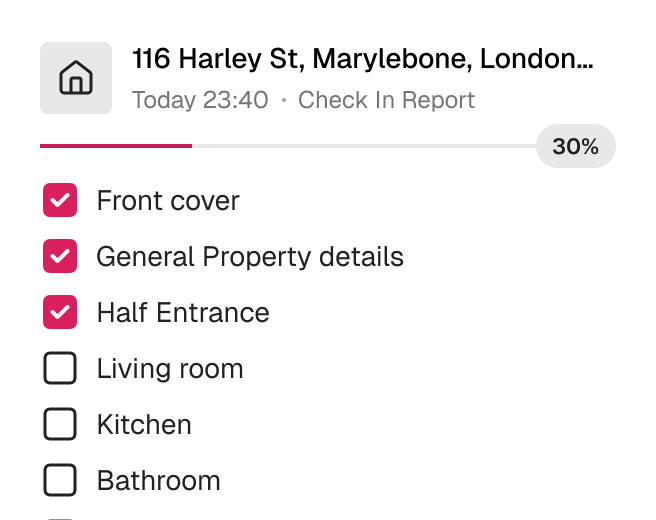
Work through the property in the same order every time. A fixed route stops you missing rooms and makes reports comparable. Use this as a starting point and adapt it to your own templates.
Outside and entrance
- Front door, locks and any security fittings
- Gardens, paths, bins and any outbuildings the tenant uses
- Signs of damage, pests or structural movement
Kitchen
- Cleanliness of oven, hob, extractor and appliances
- Leaks under the sink and around the dishwasher or washing machine connections
- Condition of worktops, units, flooring and sealant
Bathrooms
- Leaks around the bath, shower, toilet and basin
- Sealant, grout and ventilation
- Damp, condensation or mould on walls and ceilings
Living areas and bedrooms
- Walls, ceilings, flooring and window frames
- Signs of damp or mould, especially on external walls and in corners
- Any damage to furniture or fittings if the property is furnished
Safety checks
- Smoke alarms and carbon monoxide detectors: present, tested and recorded, with photo evidence
- Visible electrical concerns such as damaged sockets or exposed wiring
- Heating, hot water and any water systems the property has, including little-used outlets
If the property has a water system that needs a Legionella risk assessment, that is a separate competent-person job. See our guide to Legionella risk assessment software.
Capture evidence as you go
The report is only as useful as the evidence behind it. Photograph each issue as you find it, close enough to show the detail and far enough to show where it is. Take wide shots of each room so the context is clear.
Write down what you see, not what you conclude. Specific, objective notes such as dimensions, location and extent are more useful than general comments, and they hold up better if a dispute follows. For more on wording, see how to write a property inspection report.
Photos should be dated and tied to the item they show. Property inspection apps do this automatically, which is one of the main reasons agencies move away from loose files on a camera roll.
After the visit
An inspection is not finished until the findings are acted on. Send the report to the landlord promptly, and give the tenant a chance to comment. Log any repairs, raise them with the right contractor and note who is responsible for following up. If you manage inspections across a team, property management inspection software keeps this in one place.
Then close the loop. At the next visit, start from what you recorded this time, so you can show what has been fixed, what has changed and what is still open. Inspection report software that links reports across the tenancy makes this automatic, and that is the idea behind mid-term inspection software.
How often should you inspect?
There is no single rule that fits every tenancy. Many agencies follow the landlord’s instructions and their own management policy, so check your management agreement and tenancy terms. What matters is that inspections are regular, documented and consistent.
Frequently asked questions
How do you carry out a property inspection?
Give proper notice, read the previous report, and work through the property room by room in the same order each time. Record condition, take dated photos of anything you find, check smoke and carbon monoxide alarms, and send the report promptly with any repairs followed up.
How much notice do you need to give for a property inspection?
Landlords may inspect with reasonable written notice, typically 24 to 48 hours, and tenants can refuse routine entry. Check your tenancy agreement and the current rules before booking. This is general information, not legal advice.
What should a property inspection checklist include?
A checklist should cover the outside and entrance, kitchen, bathrooms, living areas, bedrooms and safety checks. Look for leaks, damp and mould, damage, cleanliness and maintenance issues, and record smoke and carbon monoxide alarm checks.
How often should you inspect a rental property?
There is no single answer that fits every tenancy. Many agencies follow the landlord’s instructions and their own management policy, so check your management agreement and tenancy terms.
Can I do a property inspection on my phone?
Yes. Inspection apps let you record condition, capture timestamped photos and produce a branded PDF report on a phone or tablet. TouchRight works fully offline on iOS and Android, so you can inspect with no signal and sync later.
Can I try inspection software before I commit?
Yes. The 30-day free trial gives full access for up to 5 properties, with no credit card required, so you can run live inspections alongside your current tool before you decide.
Run your next inspection from your phone
Start a free 30-day trial and complete a full inspection on a real property. No card required to begin.
600+ companies · 1.3M+ reports · AIIC partner · rated 4.8/5 on Kerfuffle